
What is a Retaining Wall? Transforming Outdoor Spaces
- pkgbp02
- Feb 23
- 12 min read

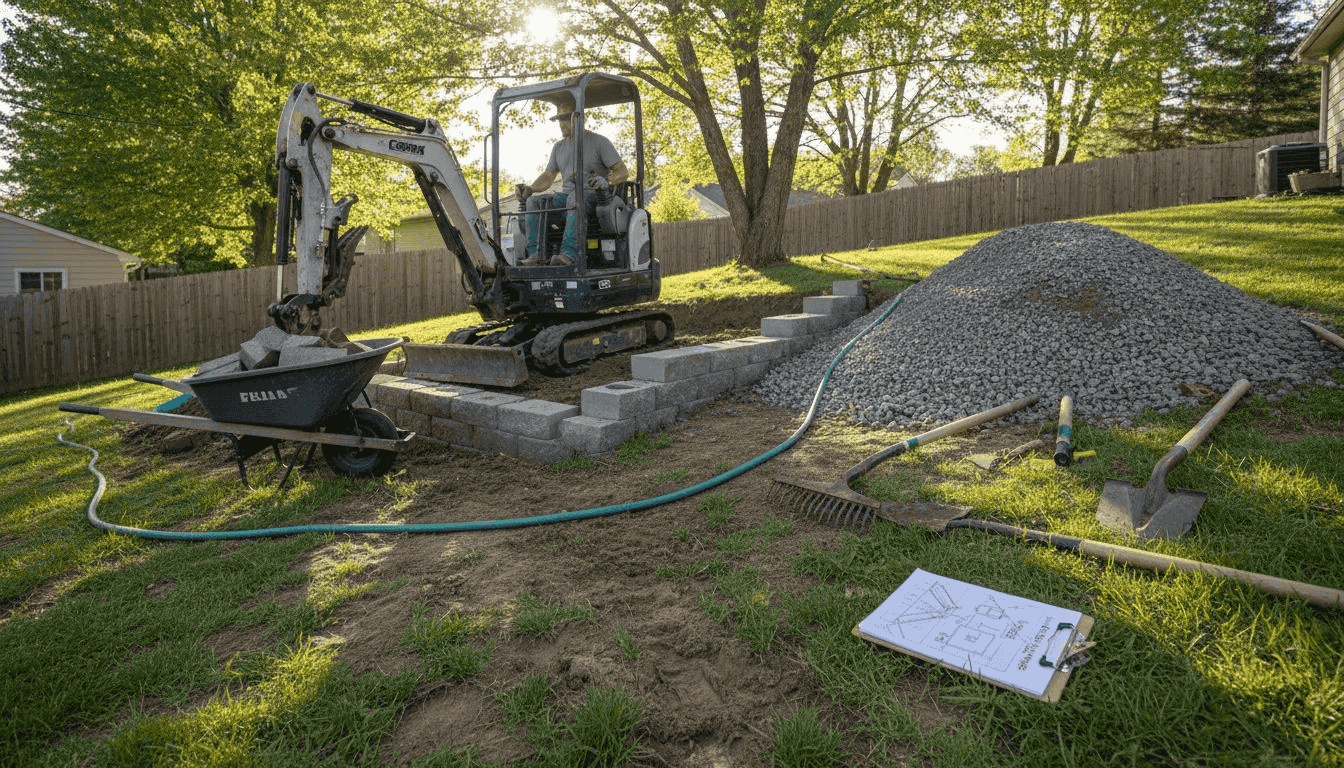
Sloped yards and shifting soil are familiar frustrations for many Etobicoke homeowners. Managing steep terrain or protecting your investment often means turning to a solution with both function and beauty. A retaining wall does far more than hold back earth—it transforms tricky ground into usable space while guarding against costly erosion and water damage. This guide delivers clear, expert guidance for choosing, designing, and installing a wall built to stand up to local conditions and last for years.
Table of Contents
Key Takeaways
Point | Details |
Understanding Retaining Walls | Retaining walls are essential structures that prevent soil erosion and provide usable outdoor space on sloped properties. Proper design and drainage are critical for their longevity. |
Types of Retaining Walls | Common types include gravity walls, cantilever walls, anchored walls, and sheet pile walls, each suited for different pressure and height requirements. Choosing the right type depends on specific terrain and budget considerations. |
Importance of Proper Drainage | Effective drainage systems are essential to prevent hydrostatic pressure build-up, which can lead to wall failure. Proper planning for drainage during installation saves future costly repairs. |
Site-Specific Considerations | Factors like soil composition, groundwater levels, and local building codes must be evaluated prior to construction to ensure wall durability and compliance with regulations. |
Defining Retaining Walls and Their Purpose
A retaining wall is a vertical or near-vertical structure that holds back soil on sloped terrain, preventing it from sliding downhill due to gravity. Think of it as a sturdy barrier between the earth above and the space below.
Retaining walls solve a practical problem that many Etobicoke homeowners face: managing elevation changes on residential properties. When your yard slopes significantly, soil naturally wants to move downward. A retaining wall stops this movement, stabilizing your landscape.
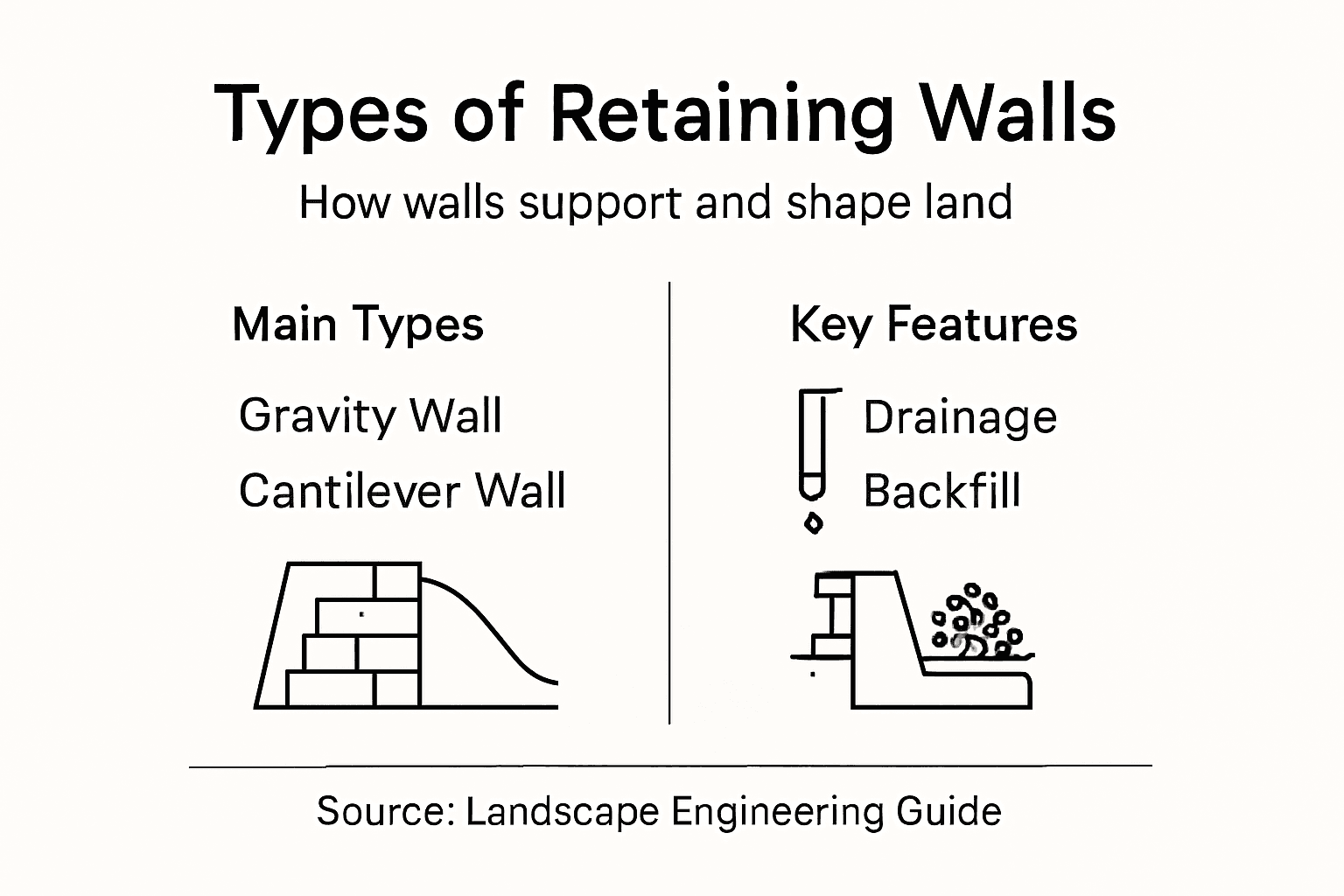
These structures work by counteracting three main forces:
Gravity pulling soil downslope
Soil pressure pushing laterally against the wall
Water pressure from rainfall and groundwater building up behind the wall
Lateral earth pressures constantly push against the wall, so proper design is essential for safety and longevity.
Why Homeowners Install Retaining Walls
Retaining walls do far more than look attractive. They create usable outdoor space, protect your property, and prevent costly erosion damage.
Common reasons to install a retaining wall include:
Creating flat, buildable areas on sloped terrain
Preventing soil erosion that damages landscaping
Protecting home foundations from soil movement
Building terraced gardens or planting beds
Adding visual interest and architectural appeal to your yard
Managing stormwater runoff and drainage on sloped properties
For Etobicoke properties with challenging grades, a retaining wall transforms what might be an unusable slope into a functional space for patios, garden beds, or outdoor living areas.
Understanding the Purpose Behind the Structure
A retaining wall isn’t just about holding dirt back. It’s about enabling your vision for your outdoor space. Whether you’re dealing with a backyard that drops off dramatically or creating distinct levels for landscaping, the wall makes it possible.
The wall also protects your investment. Without it, soil erosion gradually damages your landscaping, erodes your property line, and potentially threatens nearby structures. Water seeping through soil destabilizes everything around it.
Proper drainage behind your retaining wall prevents hydrostatic pressure buildup, which is the single biggest cause of wall failure.
This is where professional design matters. An improperly built wall fails within a few years. A well-designed wall lasts decades, protecting your property and maintaining its beauty.
Pro tip: Consider your wall’s purpose before construction—is it primarily structural support for a steep slope, or is it creating distinct outdoor living zones? This determines wall height, material choice, and drainage requirements.
Major Types of Retaining Walls Explained
Not all retaining walls are built the same way. Different types handle soil pressure differently, and choosing the right one depends on your terrain, budget, and long-term goals.
The main types are classified by how they resist the forces pushing against them. Some rely purely on weight, while others use reinforced concrete and engineering to do the heavy lifting. Understanding these differences helps you make informed decisions for your Etobicoke property.
Gravity Walls
Gravity walls are the simplest and most common type. They use their own weight to resist soil pressure pushing sideways, much like a heavy person leaning against a door to keep it shut.
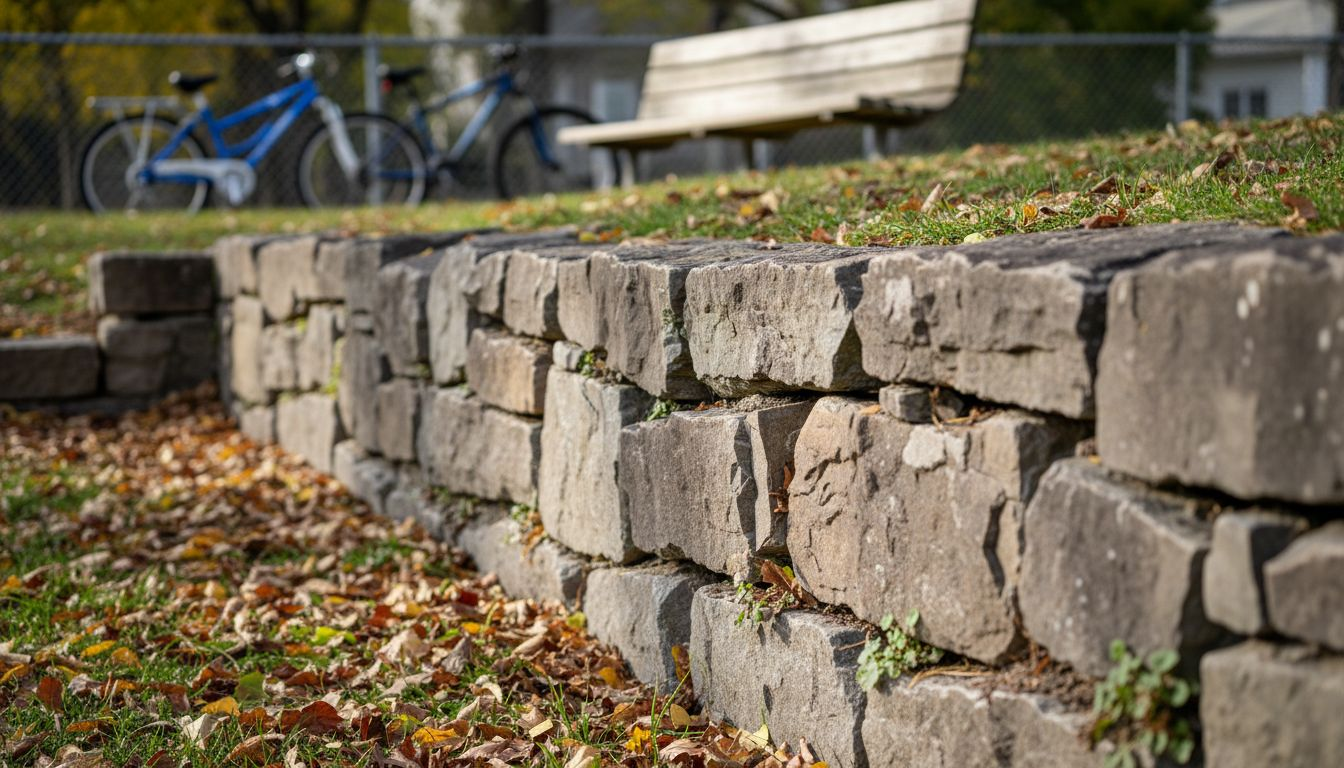
These walls work best for slopes that aren’t too steep and heights under 1.2 metres. They’re built from stone, concrete blocks, or masonry materials stacked without internal reinforcement.
Advantages of gravity walls:
Lower cost than reinforced options
Simple construction process
Effective for modest height changes
Minimal maintenance once installed
Gravity walls do have limitations. They require more material because they need substantial mass to stay stable. On steeper slopes or taller applications, they become impractical and expensive.
Cantilever Walls
Cantilever walls are reinforced concrete structures that extend into the ground like an inverted T or L shape. The underground portion (called the base) acts as an anchor, while the above-ground stem holds back the soil.
Reinforced concrete beams in cantilever walls distribute forces more efficiently than solid mass, allowing taller walls with less material. These walls can handle heights from 1.2 to 6 metres or higher.
Key benefits include:
More material-efficient than gravity walls
Suitable for taller height requirements
Takes up less space on your property
Better for challenging soil conditions
Cantilever walls cost more upfront because they require reinforced concrete and professional engineering. However, they’re the most practical choice for most residential properties with significant elevation changes.
Anchored Walls
Anchored walls use cables, rods, or other tensioning systems to brace the structure. These are common in commercial applications and steep terrain where other options won’t work.
Anchors are driven deep into stable soil layers behind the wall, then connected to the wall structure. This system handles extremely high loads and tall walls.
Sheet Pile Walls
Sheet pile walls consist of steel or concrete sheets driven vertically into the ground. They’re ideal for temporary support, waterfront applications, or areas with severe space constraints.
Sheet piles excel at preventing soil movement and water seepage simultaneously, making them popular near foundations or in flood-prone areas.
Most Etobicoke residential properties use gravity or cantilever walls because they balance cost, durability, and practicality for typical height requirements.
Choosing the right type means considering wall height, soil conditions, budget, and how you plan to use the space above and below. Professional assessment ensures your wall lasts decades without failure.
Here’s how the main types of retaining walls compare for residential use:
Wall Type | Maximum Effective Height | Space Needed | Typical Material |
Gravity | Up to 1.2 metres | Substantial | Stone or concrete blocks |
Cantilever | Up to 6 metres | Minimal | Reinforced concrete |
Anchored | Over 6 metres | Moderate | Steel cables and tiebacks |
Sheet Pile | Varies | Very little | Steel or concrete sheet piles |
Pro tip: Have your soil tested before selecting a wall type—soil composition determines load-bearing capacity and drainage requirements, which directly impact which wall system will perform best on your property.
Key Features and How They Work
A retaining wall’s success depends on several interconnected features working together. Understanding how these components function helps you appreciate why professional design and installation matter so much.
Every retaining wall must handle three primary forces: gravity pulling soil downslope, lateral soil pressure pushing sideways, and water pressure building up behind the structure. How a wall resists these forces determines its stability and lifespan.
The Foundation
The foundation is where everything starts. It sits below ground level and distributes the wall’s weight evenly across stable soil. A poorly designed foundation leads to settling, cracking, or complete failure within just a few years.
Deep foundations prevent frost heave during Etobicoke winters, when frozen ground expands and pushes structures upward. The foundation must extend below the frost line, typically 1.2 metres in our region.
Foundation requirements include:
Adequate depth below frost line
Compacted soil base for even support
Protection from water penetration
Proper drainage underneath the structure
Drainage Systems
Water is a retaining wall’s biggest enemy. When rainfall and groundwater build up behind the wall, they create hydrostatic pressure that pushes outward with tremendous force.
Drainage systems like perforated pipes and weep holes prevent this pressure from developing. Perforated pipes collect water and channel it away from the wall base. Weep holes—small openings in the wall face—allow water to escape before pressure builds.
Without proper drainage, even a well-built wall eventually fails. Water finds its way through soil, freezes in winter, and expands, cracking the wall from the inside out.
Backfill Material
The soil behind your wall matters tremendously. Compacted, well-draining backfill prevents water accumulation and ensures stable soil support.
Quality backfill includes:
Proper compaction in layers
Granular material for water drainage
Separation fabric to prevent soil erosion into drainage systems
Consistent density to avoid uneven settlement
Poor backfill causes walls to tilt, crack, or lean forward over time. This is why professional installation using engineered backfill specifications is essential.
Structural Components
The wall face itself resists horizontal pressure. Gravity walls rely on sheer mass and weight. Cantilever walls use reinforced concrete stems connected to underground base slabs that act as anchors.
The base slab distributes forces downward and prevents the wall from tipping forward. Reinforcement steel runs through the concrete, providing tensile strength where concrete alone would crack.
Proper drainage is the single most critical feature preventing retaining wall failure—more important than wall thickness or material choice.
Every component works together. Remove drainage, and your wall fails regardless of how well it’s built. Skip proper compaction, and settlement creates cracks. Ignore frost line depth, and winter freeze cycles destroy the foundation.
Pro tip: Install catch basins or French drains upgradient from your retaining wall to intercept groundwater before it reaches the structure, reducing long-term hydrostatic pressure and extending wall lifespan significantly.
Installation Requirements and Local Factors
Your Etobicoke property presents unique challenges. Soil type, winter frost, water tables, and local building codes all influence how your retaining wall must be designed and installed. Ignoring these factors leads to premature failure.
Every site is different. A wall that works perfectly in one location might fail in another just down the street. That’s why professional assessment starts with understanding your specific conditions.
Soil Analysis
Soil composition determines how much lateral pressure your wall must resist. Clay holds water and creates higher hydrostatic pressure. Sandy soil drains quickly but offers less friction to resist sliding.
Site-specific soil analysis guides foundation depth, wall height limits, and drainage specifications. Geotechnical engineers test soil samples to measure load-bearing capacity and friction angles.
Soil considerations include:
Soil type and density
Groundwater depth and seasonal fluctuation
Expansion potential (especially clay soils)
Angle of repose and natural slope stability
Skipping soil testing saves money initially but guarantees expensive problems later. Proper testing costs a few hundred dollars and prevents tens of thousands in repairs.
Etobicoke Winter Conditions
Frost heave is real in our climate. When ground freezes and thaws repeatedly, ice lenses form in soil and expand, pushing structures upward with tremendous force. Foundations that don’t reach below the frost line fail within 3-5 years.
Our region’s frost line typically extends 1.2 metres deep, though local variations exist. Winter moisture also creates hydrostatic pressure as groundwater freezes behind the wall.
Winter-specific requirements:
Foundation depth below frost line
Proper drainage to prevent ice formation
Backfill material with low water retention
Compaction standards that prevent settling
Building Codes and Permits
Etobicoke requires permits for retaining walls exceeding certain heights, typically 1.2 metres or higher. Inspectors verify that designs meet local regulations, including structural adequacy and drainage standards.
Permit requirements ensure your wall is:
Designed by qualified professionals
Built with proper materials and methods
Inspected during construction
Registered with the municipality
Building without permits creates problems if you sell your home or file insurance claims. It also violates municipal bylaws and can result in fines or forced removal.
Groundwater Management
Groundwater levels fluctuate seasonally in Etobicoke. Spring snowmelt and heavy autumn rains raise water tables significantly. Your wall must handle these changes without failure.
Proper foundation preparation and drainage systems account for peak groundwater conditions, not average conditions. This means designing conservatively to handle worst-case scenarios.
Design your retaining wall for worst-case groundwater conditions, not average conditions—spring melt and heavy rains will test your drainage system’s limits.
Surrounding environment matters too. Sloped terrain upgradient from your wall channels additional water toward it. Nearby downspouts or poorly graded landscaping accelerates water accumulation.
Pro tip: Before hiring a contractor, request a geotechnical report for your property—this $500-800 investment reveals soil conditions, groundwater depth, and frost line specifics that prevent costly design mistakes.
Key site considerations for Etobicoke retaining walls include:
Factor | Why It Matters | Practical Example |
Soil Composition | Affects load-bearing and drainage | Clay increases water pressure |
Seasonal Groundwater | Determines drainage design | Spring melt boosts water load |
Winter Frost Line | Sets minimum foundation depth | 1.2 metres in Etobicoke |
Permit Requirements | Ensures legal compliance and safety | Needed for walls over 1.2 m |
Common Pitfalls and Best Practices
Most retaining wall failures aren’t due to bad luck. They result from predictable mistakes that are entirely preventable with proper planning and execution. Understanding what goes wrong helps you avoid expensive repairs.
Years of failed walls teach us what works and what doesn’t. The difference between a wall that lasts 50 years and one that fails in 5 years often comes down to decisions made before construction even begins.
The Drainage Mistake
Neglecting drainage is the number one pitfall. Homeowners and even some contractors underestimate how much water builds up behind a wall. They think “it’ll drain fine” without planning how.
Without proper drainage systems, hydrostatic pressure accumulates behind your wall. This pressure pushes outward with thousands of kilograms of force. Eventually, the wall tilts, cracks, or fails completely.
Drainage mistakes include:
No perforated pipes behind the wall
Missing weep holes in the wall face
Inadequate drainage rock or geofabric
Downspouts draining toward the wall
Grading that channels water against the structure
Solving drainage during construction costs extra but prevents tens of thousands in repairs later. Fixing it after the wall fails means complete reconstruction.
Poor Material Selection
Using cheap or unsuitable backfill materials creates long-term problems. Compacted clay behind a wall holds water and creates pressure. Uncompacted backfill settles unevenly, cracking the wall.
Quality backfill uses granular, well-draining material compacted in proper layers. This costs more upfront but ensures stability for decades.
Pitfalls to avoid:
Using excavated soil as backfill without testing
Skipping compaction or rushing the process
Mixing soil types without planning drainage
Placing unsuitable materials near the wall
Cutting Corners on Foundation
Saving money on foundation depth or preparation leads to frost heave and settling. Foundations must extend below the frost line and sit on solid, compacted soil.
Half-hearted preparation—dumping a few inches of gravel and building on top—sets the stage for failure within 3-5 years. Your wall shifts, cracks develop, and water penetrates through.
Best Practices for Success
Thorough geotechnical evaluations/issue-10/technical-guidance-note-(level-1-no-33)-retaining/) before construction prevent problems. Engineers assess soil conditions, design appropriate drainage, and specify materials that work for your site.
Successful installations follow this approach:
Conduct soil testing and geotechnical analysis
Design drainage systems for peak water conditions
Specify appropriate backfill materials
Plan for settlement and seasonal movement
Use qualified contractors and obtain permits
Schedule inspections throughout construction
Regular inspection and maintenance after installation catch problems early. Small repairs prevent major failures.
The cheapest retaining wall is the one built right the first time—cutting corners always costs more in the end.
Professional design adds 5-10% to project cost but eliminates 90% of failure risk. That’s a worthwhile investment protecting your property and your wallet.
Pro tip: Require your contractor to provide before and after photos of drainage installation, foundation preparation, and backfill compaction—photographic documentation proves work was done correctly and protects you if problems emerge later.
Build Retaining Walls That Last and Beautify Your Etobicoke Property
Dealing with unstable slopes and water pressure can feel overwhelming when planning your outdoor space. The key to transforming challenging terrain lies in well-designed retaining walls that combine durability, drainage, and style. At Interlocking Etobicoke, we understand the importance of proper foundation depth, efficient drainage systems, and quality backfill—all essential elements for retaining walls that stand the test of time and seasonal weather changes.
Enhance your property with our expertly crafted retaining walls that protect your home from erosion while creating usable, beautiful outdoor spaces. Whether you need a gravity wall for modest slopes or a reinforced cantilever wall for steeper grades, we tailor solutions to your needs using premium materials and precise installation. Don’t let hydrostatic pressure or frost heave compromise your investment. Visit our website and explore how Interlocking Etobicoke can bring your outdoor vision to life with high-quality retaining walls and drainage systems designed specifically for Etobicoke’s climate and soil conditions. Contact us today to secure your property and elevate your outdoor living experience.
Frequently Asked Questions
What is the primary purpose of a retaining wall?
A retaining wall is designed to hold back soil on sloped terrain, preventing it from sliding downhill due to gravity and stabilizing the landscape.
What are the main types of retaining walls and their differences?
The main types include gravity walls, which use their own weight; cantilever walls, which are reinforced concrete structures that extend into the ground; anchored walls, which use tension systems for stability; and sheet pile walls, which are suited for temporary support or flood-prone areas.
Why do homeowners choose to install retaining walls?
Homeowners install retaining walls to create usable outdoor spaces, prevent soil erosion, protect foundations from soil movement, build terraced gardens, and manage drainage on sloped properties.
What factors should be considered when designing a retaining wall?
Important factors include soil composition, drainage needs, frost line depth, wall height, intended use of the space, and local building codes to ensure safety and functionality.
Recommended
Comments